Discovering Light Through Play
Light and shadows are part of children’s everyday surroundings, but they can also become exciting tools for learning. A simple shadow on the floor, sunlight coming through a window, or a torch creating shapes on a wall can encourage preschoolers to observe, question and experiment.
For children attending preschools in Trivandrum, light and shadow activities can turn ordinary moments into hands-on learning experiences. These simple activities can also be included in engaging preschool programs in Trivandrum to introduce basic scientific ideas through play.
Why Light and Shadow Activities Are Valuable
Preschoolers naturally learn by observing what happens around them. When they experiment with light and objects, they begin to notice relationships between light, distance, position and shape.
These activities can help children:
-
Observe changes carefully
-
Make simple predictions
-
Understand basic cause and effect
-
Develop early scientific thinking
-
Describe what they see
-
Explore shapes and movement
-
Ask questions and test ideas
The goal is not to teach complicated science concepts but to encourage children to explore and discover.
Simple Light and Shadow Activities
Light and shadow play does not require expensive equipment. A torch, a few everyday objects and a suitable wall or surface can provide plenty of opportunities for exploration.
|
Activity |
What Children Explore |
Simple Idea |
|
Torch shadows |
Size and shape |
Move an object closer to the torch |
|
Shadow tracing |
Shapes |
Trace a toy's shadow on paper |
|
Shape shadows |
Recognition |
Make shadows using different objects |
|
Outdoor shadows |
Position |
Observe shadows at different times |
1. Make Animal Shadows
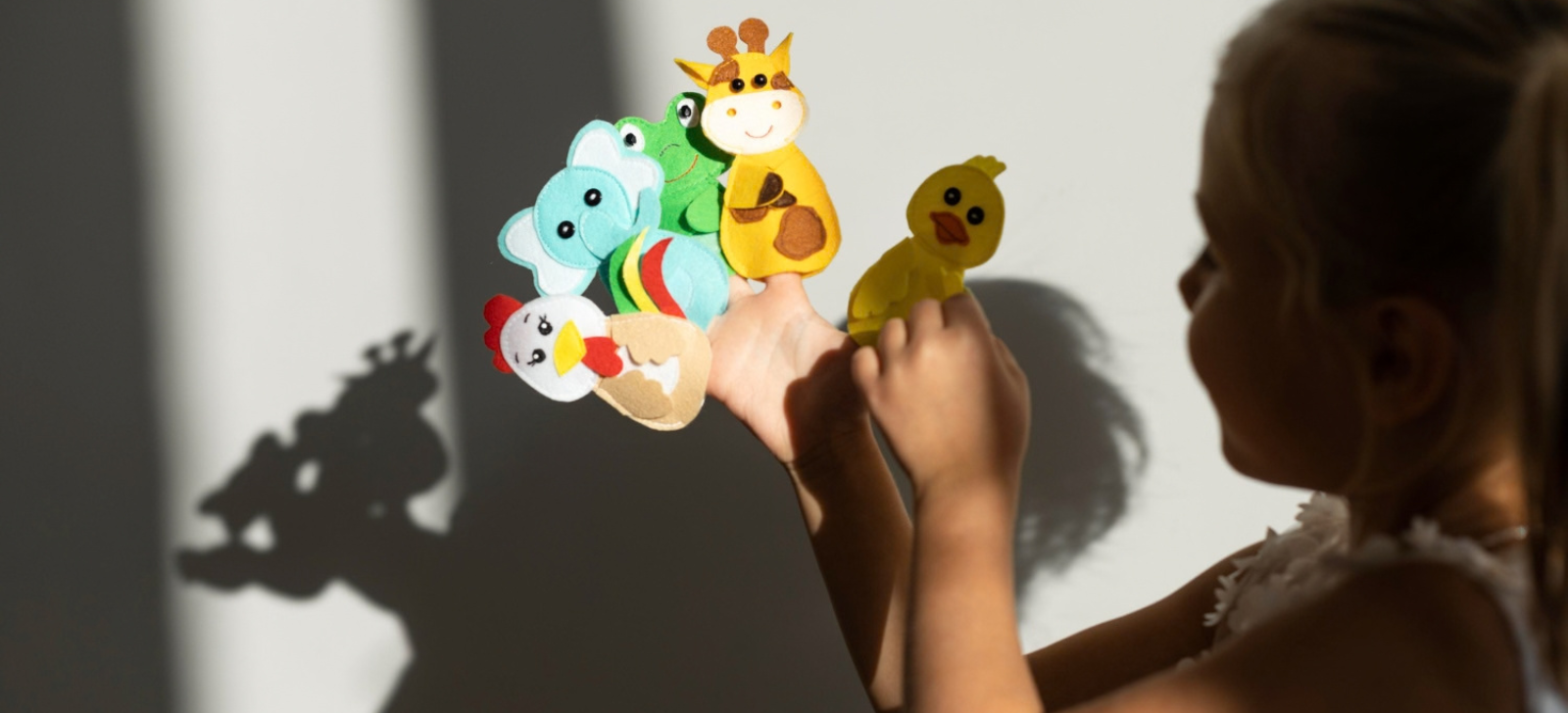
Children can use their hands or simple toys to create animal-like shadows. Ask them what the shadow looks like and encourage them to change its position.
This can become a fun activity in play schools in Trivandrum, where children can combine imagination with observation.
2. Shadow Tracing
Place a toy near sunlight and allow its shadow to fall on a sheet of paper. Children can trace around the shadow and then decorate the picture.
This activity introduces children to shapes while giving them an opportunity to observe how shadows change.
3. Big Shadow, Small Shadow
Use a torch and an object to demonstrate how moving the object closer to or farther from the light can change the size of its shadow.
Children can make predictions before trying it themselves. This encourages them to think about what might happen and compare the results.
4. Shadow Hunt Outdoors
During outdoor play, children can look for shadows made by trees, buildings, playground equipment and other objects. They can compare which shadows are long, short, dark or faint.
Activities like these can be part of the hands-on approach offered by preschools near Technopark, helping children connect classroom learning with the world around them.
What Children Learn Through Light and Shadow Play
Regular exploration can support several areas of early learning:
-
Observation: Children notice small changes in their surroundings.
-
Reasoning: They begin connecting actions with results.
-
Vocabulary: Words such as bright, dark, near, far, big and small become meaningful.
-
Creativity: Children experiment with shapes and imaginative shadow figures.
-
Confidence: Trying different ideas gives children opportunities to discover answers independently.
Creating Meaningful Learning Experiences
A best play school in Trivandrum does more than provide activities; it creates opportunities for children to explore concepts in ways that feel natural and enjoyable. Light and shadow experiments are a good example because children can learn while moving, observing and playing.
At TRINS Early Learning Centre, age-appropriate activities can help children develop curiosity and practical understanding through everyday experiences. Whether children are exploring shadows outdoors or experimenting with a torch indoors, simple discoveries can make learning memorable.
Conclusion
Light and shadow play shows preschoolers that learning can happen anywhere. With a few everyday objects and plenty of opportunities to explore, children can observe changes, ask questions, make predictions and discover simple relationships.
For families exploring kindergarten in Trivandrum, choosing an environment where children can learn through hands-on experiences can help make their early learning years engaging, meaningful and enjoyable.