How Pretend Play Builds Social Skills Through Everyday Experiences
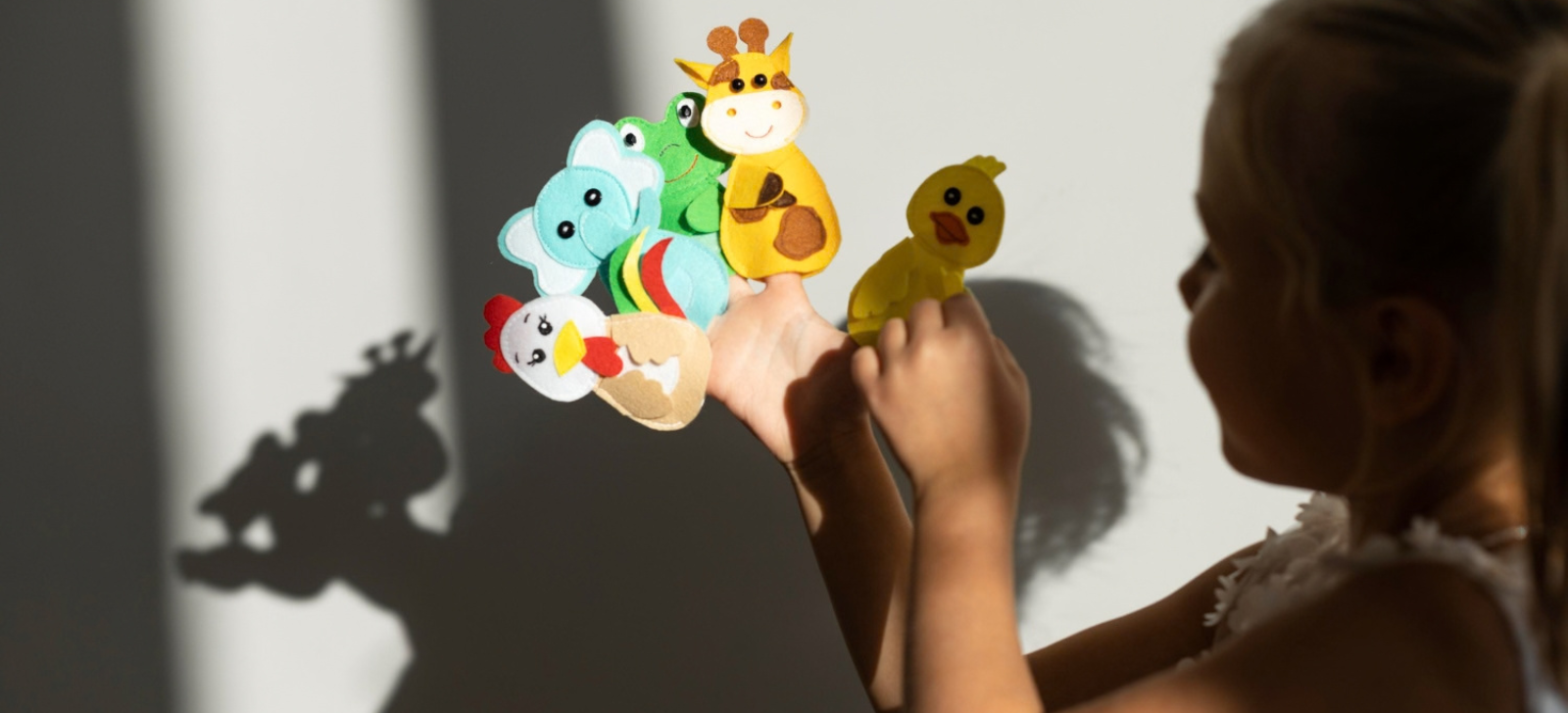
Children learn about the world not only by observing what happens around them but also by recreating everyday experiences through play. Pretend play allows children to imagine different situations, take on roles, communicate with others, and understand how people interact in daily life.
Whether they are pretending to be teachers, doctors, shopkeepers, parents, or community helpers, these simple activities introduce children to real-world experiences in an enjoyable way. For parents exploring preschools in Trivandrum, understanding the importance of pretend play can help them recognise how early learning activities contribute to a child's social development.
1. Understanding Different Social Roles
Pretend play gives children opportunities to experience different roles and responsibilities. When children act as teachers, doctors, shopkeepers, or family members, they begin to understand how people contribute to everyday situations.
Some examples include:
-
Pretending to be a teacher and helping classmates with an activity.
-
Playing doctor and learning how to care for others.
-
Acting as a shopkeeper and interacting with customers.
-
Pretending to prepare meals and serve family members.
-
Taking on the role of a community helper.
These activities introduce children to different social responsibilities and help them understand how people interact in their communities.
2. Developing Communication Skills
Communication is an important part of social interaction. During pretend play, children use words, expressions, and gestures to share ideas and continue their imaginary situations.
For example, during a pretend restaurant activity, children may take orders, ask questions, explain their choices, and respond to others.
Such experiences help children:
-
Express their thoughts and ideas.
-
Ask questions and respond appropriately.
-
Develop conversational skills.
-
Learn new words and expressions.
-
Understand the importance of listening.
These communication opportunities are valuable in preschool programs in Trivandrum, where children begin developing the language skills needed for group learning and everyday interactions.
3. Learning to Share and Take Turns
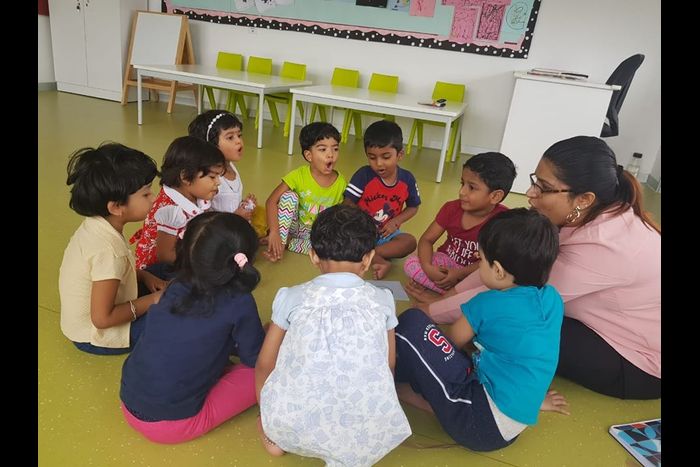
Many pretend-play activities involve multiple children participating in the same situation. They may need to share toys, exchange roles, or wait for their turn to participate.
For instance, during a pretend grocery store activity, one child may act as the shopkeeper while another plays the customer. They can later exchange roles to experience both sides of the interaction.
Through these experiences, children gradually learn:
-
Why sharing is important.
-
How to wait for their turn.
-
How to cooperate during group activities.
-
How to respect other children's participation.
-
How to follow simple rules.
These experiences can support children as they adjust to group environments in play schools in Trivandrum and kindergarten classrooms.
4. Understanding Emotions and Feelings
Pretend play allows children to explore different emotions by imagining how another person might feel in a particular situation.
For example, a child pretending to care for a sick doll may begin to understand the importance of kindness and comfort. Similarly, acting out a situation where a friend feels sad can introduce conversations about empathy and emotional responses.
Children can learn to:
-
Recognise basic emotions such as happiness, sadness, and anger.
-
Understand that different people may have different feelings.
-
Respond with kindness and consideration.
-
Express their own emotions through words and actions.
-
Recognise situations where someone may need help.
Such experiences contribute to emotional awareness and help children develop more positive relationships with others.
5. Practising Problem-Solving in Everyday Situations
Pretend play often involves small challenges that children must resolve together. These situations encourage them to think, communicate, and find simple solutions.
Consider a pretend birthday party activity. Children may need to decide who will arrange the decorations, distribute the plates, or serve the food.
During these activities, children get opportunities to:
-
Make simple decisions.
-
Suggest different ideas.
-
Discuss possible solutions.
-
Adjust their plans when something changes.
-
Work together towards a shared goal.
These experiences encourage independent thinking and introduce children to practical problem-solving in familiar situations.
6. Learning Cooperation Through Group Play
Everyday social situations often require people to work together. Pretend play introduces this concept through shared activities where children participate towards a common purpose.
Activities such as building an imaginary house, organising a pretend classroom, or setting up a toy supermarket encourage children to coordinate their actions.
Group pretend play can help children understand:
-
The importance of teamwork.
-
How to listen to different opinions.
-
Why everyone's participation matters.
-
How to complete shared activities.
-
How to respect the ideas of others.
These skills become useful as children progress from early learning environments into kindergarten in Trivandrum and formal schooling.
7. Connecting Real-Life Experiences With Learning
Children often recreate situations they observe at home, in their neighbourhood, or in public places. Pretend play gives them an opportunity to understand these experiences from their own perspective.
Examples include:
-
Playing house and recreating family routines.
-
Pretending to visit a hospital.
-
Organising a classroom activity.
-
Playing a bus journey with friends.
-
Recreating a visit to a grocery store.
These familiar situations help children connect their everyday observations with communication, cooperation, and social understanding.
8. Building Confidence in Social Interactions
Some children may initially hesitate to communicate or participate in group activities. Pretend play offers a comfortable setting where they can gradually become involved without the pressure of real-life expectations.
Taking on imaginary roles can encourage children to speak, make decisions, and interact with their peers.
Repeated opportunities for pretend play can help children:
-
Become more comfortable expressing themselves.
-
Initiate conversations with other children.
-
Participate in group activities.
-
Share their ideas with confidence.
-
Explore unfamiliar roles and situations.
A supportive environment in preschools near Technopark can provide children with opportunities to participate in different forms of guided and independent play.
9. The Role of Early Learning Environments in Encouraging Pretend Play
A suitable early learning environment provides children with opportunities to explore different roles and everyday situations through play.
Parents evaluating the best preschool in Trivandrum or the best play school in Trivandrum can look at how the learning environment encourages imagination, communication, and interaction.
Some useful activities include:
-
Role-play corners: Spaces where children can act out familiar situations.
-
Dramatic play materials: Toy kitchen sets, dolls, costumes, and pretend household objects.
-
Community helper activities: Opportunities to understand different occupations and responsibilities.
-
Story-based role play: Recreating characters and situations from familiar stories.
-
Group imagination games: Activities that encourage children to develop and share imaginary situations.
These activities can be incorporated into age-appropriate preschool programs in Trivandrum and kindergarten learning experiences.
10. Supporting Social Development Across Different Age Groups
Pretend play can be introduced in different ways depending on a child's age and developmental stage.
-
Infants: Simple imitation games, facial expressions, and interactive activities introduce early social engagement. A nurturing infant care center in Trivandrum can provide age-appropriate opportunities for these interactions.
-
Toddlers: Playing with dolls, toy vehicles, and household objects encourages imitation and early communication. Quality toddler child care in Trivandrum can support these experiences through supervised play.
-
Preschoolers: Role-playing familiar situations helps children develop communication, cooperation, and emotional awareness.
-
Kindergarten children: More structured imaginary activities encourage teamwork, decision-making, and understanding of social responsibilities.
Parents looking for baby daycare in Trivandrum, a creche childcare in Trivandrum, or a creche facility in Trivandrum can also consider how children are encouraged to explore, interact, and participate in age-appropriate activities.
Encouraging Pretend Play at Home and School
Pretend play does not always require expensive toys or elaborate arrangements. Everyday objects and familiar situations can provide plenty of opportunities for children to use their imagination.
Parents and educators can encourage this type of play by:
-
Providing simple objects such as toy utensils, blocks, dolls, and picture books.
-
Allowing children to choose their own roles and create imaginary situations.
-
Participating in their activities without controlling every decision.
-
Asking open-ended questions to encourage conversations.
-
Giving children enough time to develop their own stories.
-
Encouraging interaction with other children through supervised group activities.
Families searching for a play school near Technopark, kindergarten schools in Trivandrum, or the best kindergarten schools in Trivandrum can consider whether these opportunities for imaginative and social learning are part of the educational environment.
Conclusion
Pretend play is an important part of early childhood because it helps children understand everyday interactions through familiar and enjoyable experiences. From learning to share and communicate to recognising emotions and cooperating with others, imaginary situations introduce valuable social skills that children can use in their daily lives.
Choosing an early learning environment that encourages imagination, meaningful interaction, and age-appropriate activities can support these developmental experiences. Whether parents are exploring preschools in Trivandrum, kindergarten in Trivandrum, or childcare options for younger children, opportunities for pretend play are worth considering when evaluating a child's early learning experience.